Every client on their own hostname
Tickets, users, and branding resolve from the address your client visits. One deployment serves all of them, and none of them can see each other.
Simple, Fast, Reliable
Help Desk Horizon gives every client you support their own hostname, their own branding, and their own strictly isolated data — from one console your technicians actually want to work in.
Already a client of an MSP that uses Help Desk Horizon? Use the address they gave you — your service desk lives on their hostname, not this one.
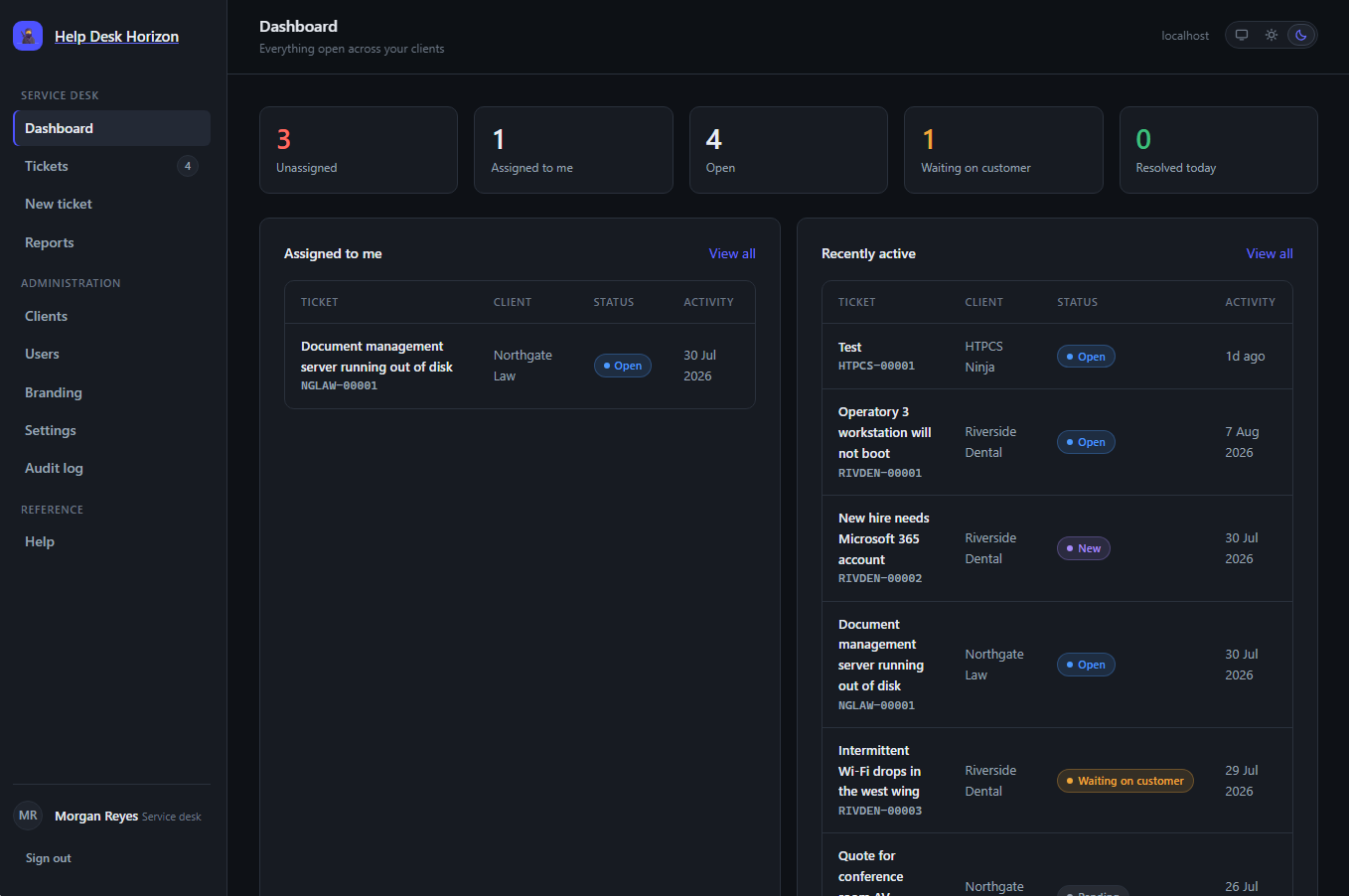
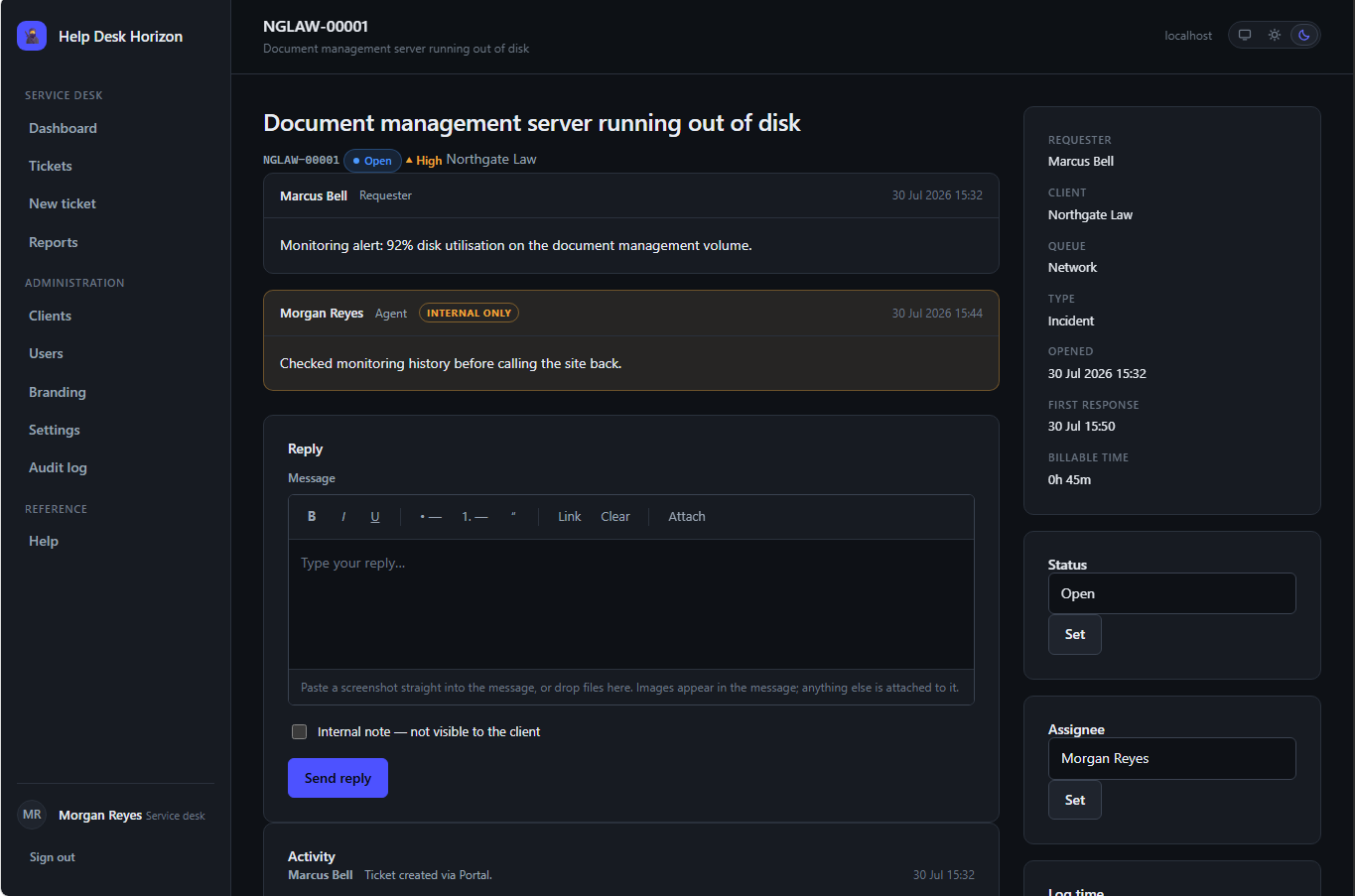
Tickets, users, and branding resolve from the address your client visits. One deployment serves all of them, and none of them can see each other.
RIVDEN-00001 belongs to Riverside Dental and NGLAW-00001 to Northgate Law. Numbering runs per client, not per system, so a ticket key tells you whose it is.
Product name, accent colour, and login copy are yours, down to the individual client if you want. Colours are contrast-checked on the way in, so a brand palette can never render the interface unreadable.
A note marked internal is filtered out server-side for client users. It is absent from the response, not hidden with CSS — the difference matters the first time someone opens developer tools.
Your client's staff raise a ticket, see their own history, and reply. Requesters see only their own tickets; their admins see the whole company's.
Every consequential action is recorded, and the application's own database role holds no permission to update or delete those rows. Including when platform support views a tenant — which the tenant sees in their own log.
Client data separation is the whole job. One layer is a single bug away from a cross-tenant leak, so Help Desk Horizon enforces it three times independently.
Each layer is covered by tests that run against a real database, including tests that deliberately attempt cross-tenant reads and writes.
Tell us what you run today and we'll show you the parts that matter to you.
What you send is stored so we can reply to it, and used for nothing else.